


Make confident Software decisions without compromising your future options.
Independent commercial advice that helps organizations preserve strategic autonomy while navigating Software licensing, cloud transformation, AI and complex vendor negotiations.
Our Experts

Meet Marjon
For more than 20 years, I’ve been helping organizations navigate complex SAP commercial decisions.
After spending 10 years at SAP and nearly another decade advising customers at a specialised software licensing consultancy, I’ve seen enterprise software from both sides of the table.
That’s exactly why I founded Saptimize.
I believe organizations deserve an independent advisor who helps them make informed commercial decisions – not just better software deals.
Whether you’re preparing for a contract renewal, evaluating S/4HANA or RISE, reviewing your licensing position or planning your next strategic move, my role is to provide clarity, challenge assumptions and strengthen your negotiating position.
No unnecessary complexity. No vendor agenda. Just independent advice that helps you make confident decisions.
What clients value
• Independent perspective
• Commercial expertise built inside and outside SAP
• Straightforward, no-nonsense advice
• Clear data, clear choices and stronger negotiations
Our Services
Services that work in your interest, not the vendor’s

Compliance & Current State Reviews
Before making strategic decisions, you need a clear understanding of your current position.
We assess your Software licensing, contractual entitlements and compliance exposure, providing an objective view of potential risks, optimisation opportunities and commercial considerations – so you’re well prepared for audits, renewals and future negotiations.
Commercial & Transformation Strategy
Whether you’re evaluating S/4HANA, RISE, cloud adoption or Business Data Cloud, the right decision goes beyond technology.
We help you understand the commercial implications, compare scenarios and develop a strategy that aligns with your business objectives while preserving future flexibility.
Commercial Negotiation Support
Major Software decisions deserve an independent perspective.
We validate commercial proposals, licensing models and contract structures, challenge assumptions where appropriate, and support negotiations – helping you secure agreements that align with your business strategy, not just your software vendor’s.
Continuous Commercial Optimisation
Commercial optimisation doesn’t stop once the contract is signed.
We help organisations continuously align licensing, contractual entitlements and software usage with changing business needs, ensuring long-term value, reducing unnecessary spend and avoiding future surprises.
Why Saptimize?
Helping you see beyond the proposal.

ExperienceD
10 years at SAP. 10 years advising customers

Independent
No vendor agenda. Just your business objectives

PROVEN RESULTS
Millions of euros in client savings

STRATEGIC DECISIONS
Focused on business outcomes
Contact form
Let’s discuss your Software challenge
Every organization has a different Software landscape, commercial position and business strategy.
That’s why I don’t believe in standard solutions.
Whether you’re preparing for a renewal, evaluating cloud options or simply looking for an independent perspective, I’d be happy to discuss your situation.
No vendor agenda. No obligation. Just an honest conversation about your options.
Not sure whether Saptimize is the right fit? Feel free to reach out anyway. If I can’t help, I’ll gladly point you in the right direction.
Insights
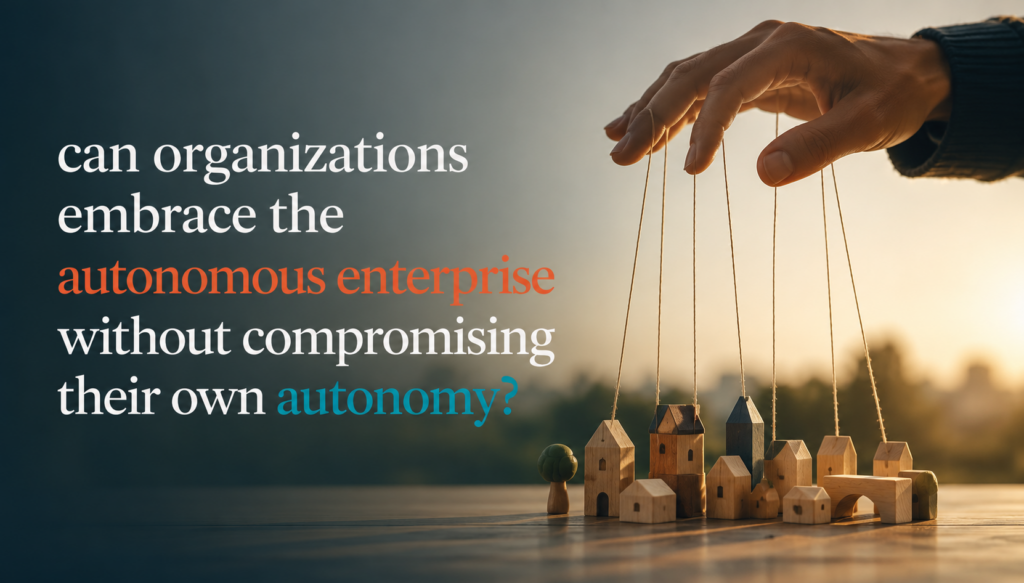
CAN ORGANIZATIONS EMBRACE THE AUTONOMOUS ENTERPRISE WITHOUT COMPROMISING THEIR OWN AUTONOMY?
Author: Marjon Schellekens – Louwers ( Independent SAP Commercial & Licensing Strategy Advisor )
Sometimes I wonder whether the move to cloud was ever just about infrastructure. Perhaps it also changed the balance of control.
Now, in the era of AI, that question becomes even more relevant. Historically, SAP’s strength was openness – integrating with diverse systems, tools and ecosystems. Today, the conversation increasingly seems to shift toward preferred platforms, proprietary ecosystems and tighter integration models.
Why?
For decades, enterprise applications combined data, business rules and transaction execution in a single platform. But by separation of those layers and (temporary) AI solutions increasingly becoming the primary interface to enterprise data & software – and AI agents become its primary consumers – the value shifts from the application itself to something more fundamental: the business knowledge that gives data meaning.
Recent Sapphire announcements illustrate this well. Beyond AI agents and the Autonomous Enterprise, SAP introduced concepts such as Organizational Memory – capturing not just transactions, but the relationships, decisions and business knowledge that AI needs to act intelligently.
Perhaps that also explains why topics such as data access, API and MCP governance, semantic models and business knowledge are suddenly becoming strategic battlegrounds – not just for SAP, but across the enterprise software industry.
As AI becomes the primary interface to the enterprise, the question is no longer just who owns the applications – but who shapes the ecosystem that AI depends on.
Can organizations embrace the Autonomous Enterprise without compromising their own autonomy?
Not just the autonomy to adopt AI. But the autonomy to choose their AI models, hyperscaler, integration strategy, commercial model and future technology direction.
Innovation and future integration undoubtedly create enormous opportunities. But preserving customer choice and strategic flexibility may become just as important.
How do you see the right balance between innovation, integration and maintaining long-term autonomy?

STAY WEIRD. THE FUTURE NEEDS IT.
Author: Marjon Schellekens – Louwers ( Independent SAP Commercial & Licensing Strategy Advisor )
Keep evolving without losing what makes you recognisably you.
I’m sure you recognise this… I was working on an article and asked ChatGPT to improve it. The first version was clearer, so I asked it to have another go, and then another one.
After the third version, there was nothing wrong with the article, but it just didn’t sound like me anymore. One thought had been changed so much that it no longer felt authentic, so I changed it back. Then, I also put back a long sentence and a few words that sounded like a bad translation from Dutch into English (apparently, even my English needs to stay a little Dutch) and had to re-tweak a lot of other items too. Long story short… I asked AI to improve the article and ended up undoing those improvements.
I still used AI to help write the version you are reading, so I’m hardly arguing against it. I like what it can do. But what I want is to recognise my own thinking and style in the finished article.
People tell me they have the same reactions at work. They receive an email from a colleague, supplier or adviser and immediately sense that it was written by AI. The message may be clear, polite and perfectly fine. It just gives little sense that the sender thought about what they wanted to say or who would be reading it.
An email is a small example. The larger issue begins when technology shapes how a company works. Companies are encouraged to standardise, automate and become autonomous. Much of that makes sense. Some complexity really should disappear. Yet, an exception that looks inefficient may carry years of experience, it can be part of how a company thinks, solves problems and serves its customers. Remove too much of it and the company may run more efficiently while losing part of the reason customers chose it. It lost its authentic self.
Boardrooms are spending a lot of time on where AI can create value, whether the data is ready, how the risks will be managed and how costs will be kept under control. Fair enough. Used well, AI can take away some of the routine and give people more room to think, decide and create. In my view, boards should be just as clear about what the company does not want to lose: the judgement by its people, its culture and values, and the reason it exists (in other words, its heart).
When the algorithm points a different direction than experience, or simply gut feeling, I would not ignore that too quickly. There may be a reason for it. Both have value. The same applies when a company’s technology roadmap starts to look remarkably like its vendor’s. It may be time to check who is still setting the direction.
For me, staying weird is not about being different for the sake of it. It is about keeping the freedom to think for yourself and not automatically following your competitors, your software vendor or anyone or anything else. It is what keeps a company real and recognisably itself.
“Stay weird” will probably not appear in the board papers. Call it “strategic differentiation” if that looks more comfortable in the minutes. But think for a moment what the difference can be between thrive and survive. To thrive you should set, live and broadcast your authentic self.
Recognisable? My next article will dive into how to protect your weirdness, which parts to protect and why it is hard, especially with standard solutions offered by vendors. If you can’t wait till my next article, feel free to reach out to me now already.